Jangsan Beom: The Korean Monster That Mimics Familiar Voices
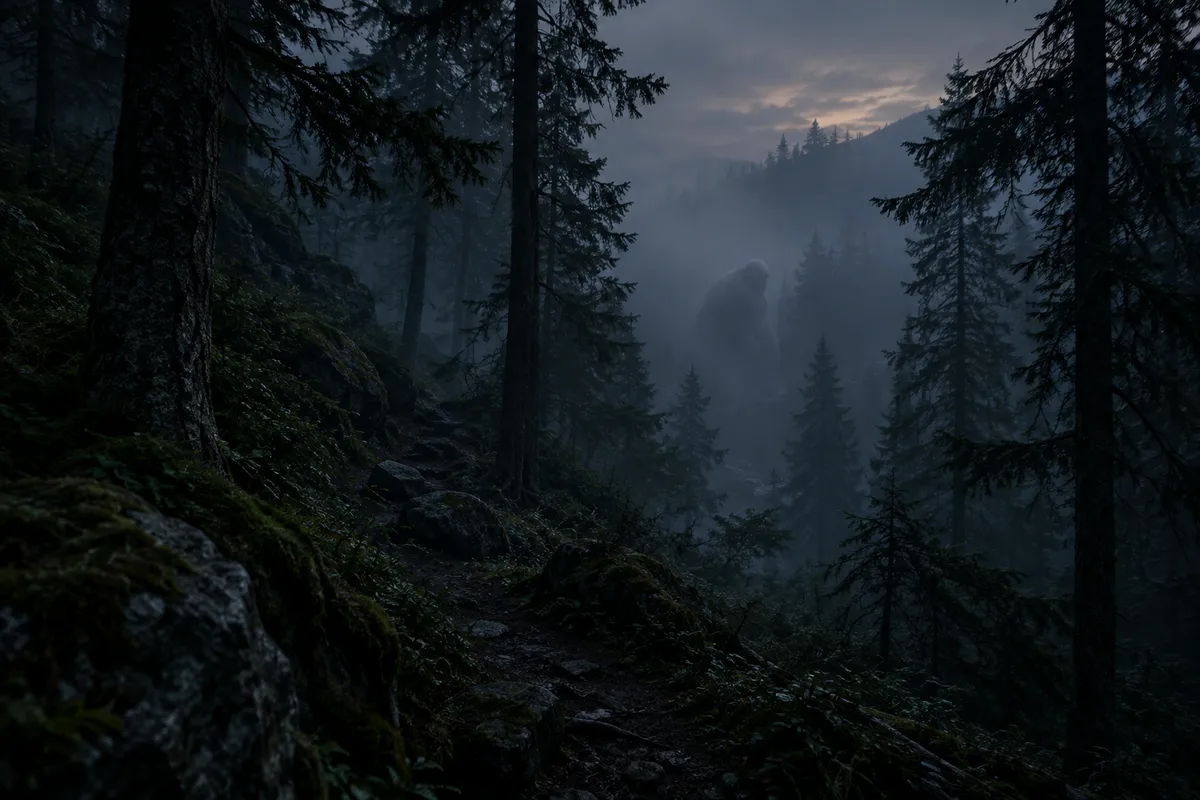
You're on a mountain trail and you hear your mother calling your name from the trees. Or a friend's voice, asking you to come closer. Follow it, the story goes, and you never come back. This is the Jangsan beom (the "Tiger of Mount Jangsan"), one of Korea's best-known modern monsters. It feels like ancient folklore, but it's actually a fairly recent internet legend. Here's how the story spread, what it borrows from much older beliefs, and why it works so well. ▶ What is the Jangsan beom supposed to be? The name comes from Mount Jangsan in Haeundae, Busan. Put together the versions shared online and you get roughly this: - It looks like a tiger or large beast covered in long white fur. Details change from story to story. - Its defining trait is mimicry: it imitates the voice of someone you know, a family member or friend, to lure you. - Some versions say it can also imitate running water or a person crying. - Sightings were soon reported from mountains all over Korea, not only Jangsan. In 2017 the Busan Ilbo newspaper described it as "an unidentified beast resembling a white tiger" said to lure people by imitating the voices of people close to them. ▶ When did the legend spread? The Jangsan beom spread mainly in the late 2000s and 2010s through Korean online communities, in the form of "this happened to me" or "this happened to my friend" posts. Nobody knows who wrote the first one or exactly when. The name is hard to find in older books or folklore dictionaries. In 2017 director Huh Jung released the horror film The Mimic, based on the legend. The film rarely shows the creature. Instead it builds fear through voices coming from every direction, which captures what the legend is really about: not how the monster looks, but how it sounds. ▶ An older relative: the changgwi The Jangsan beom is new, but its skeleton is very old. Korean tradition has the changgwi, the ghost of a person who was eaten by a tiger. The ghost becomes the tiger's servant and lures other people to it. In changgwi stories, voices matter too. People were warned not to answer if someone called their name from outside the door at night, or if a familiar voice called them deeper into the mountains. These stories come from a time when tigers really did live in Korea's mountains and walking alone through them was dangerous. The Jangsan beom can be seen as that old fear with a new internet-age name. ▶ Why voice legends are so frightening A voice is one of the signals we trust most. You don't need to see your mother's face to turn around when she calls you. The Jangsan beom flips that trust into a threat. Mountains also make sound hard to read. Echoes bounce off rock and valleys, so it's hard to tell where a sound comes from, and wind, birds or animals can briefly sound like a human voice. Feeling that "someone just called me" while hiking alone is more common than you'd think. ▶ How to read Jangsan beom sightings Almost every Jangsan beom story online is second-hand: "this happened to a friend," "when I was a kid in the countryside." These posts pull you into the story, but you can almost never check who, when or where. The same plot often reappears with only the place changed. So the honest answer is that the Jangsan beom is not a real animal. It's an internet-era monster that many people built together. That doesn't make it less interesting. It shows exactly what kind of fear people are drawn to. ▶ What is Mount Jangsan actually like? Mount Jangsan is a popular hiking spot in Haeundae, Busan, with views over Haeundae Beach and the city. Apartment blocks line its lower slopes and many locals hike it every day. That everyday closeness may be exactly what made the legend feel real: it happened on "the mountain I know." ▶ Fact or rumor? Is the Jangsan beom real? There's no evidence it exists, and no sighting has ever been verified. Is it the same as the changgwi? No. The changgwi is a traditional ghost serving a tiger; the Jangsan beom is a modern online legend. They share the idea of luring people with familiar voices. Should you answer if someone calls your name on a mountain? Old stories say no. In real life, echoes cause most of these moments. Stay calm and stick with your group. Is Mount Jangsan dangerous? It's a well-used hiking mountain. The real advice is the usual: don't hike alone after dark. ▶ Have you heard it? Have you ever been hiking or camping and heard someone call your name, only to find nobody there? Share your strange sound story in the comments. More Korean urban legends: https://unnlog.com/talk/182 Korean ghosts and monsters, 18 types: https://unnlog.com/talk/181 Sources: Busan Ilbo, "Jangsan beom, the beast that lures people with voices" (Aug 17, 2017); Standard Korean Language Dictionary, "changgwi"; The Mimic (2017, dir. Huh Jung).