The Red Bird of the South Gate: A Korean Legend
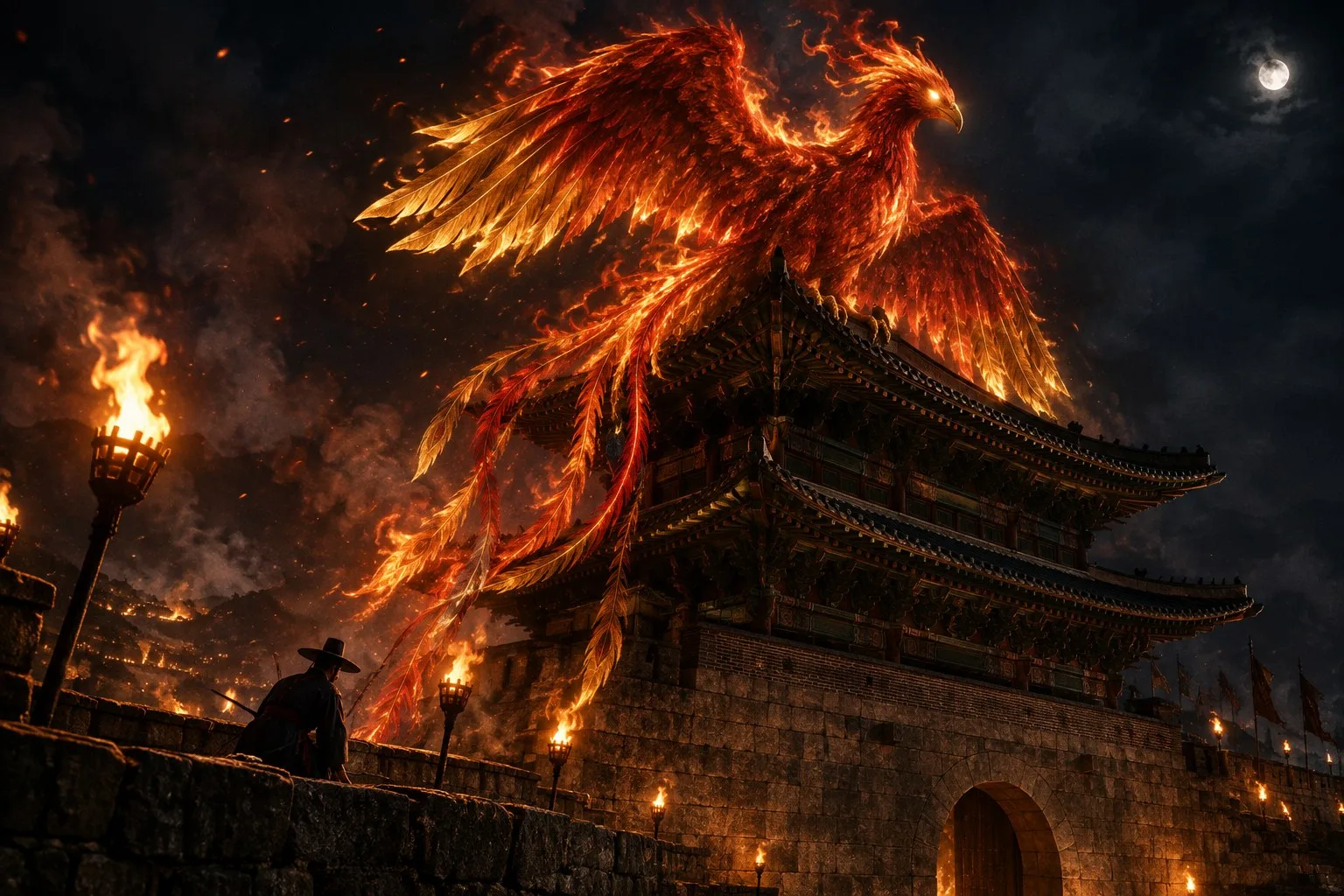
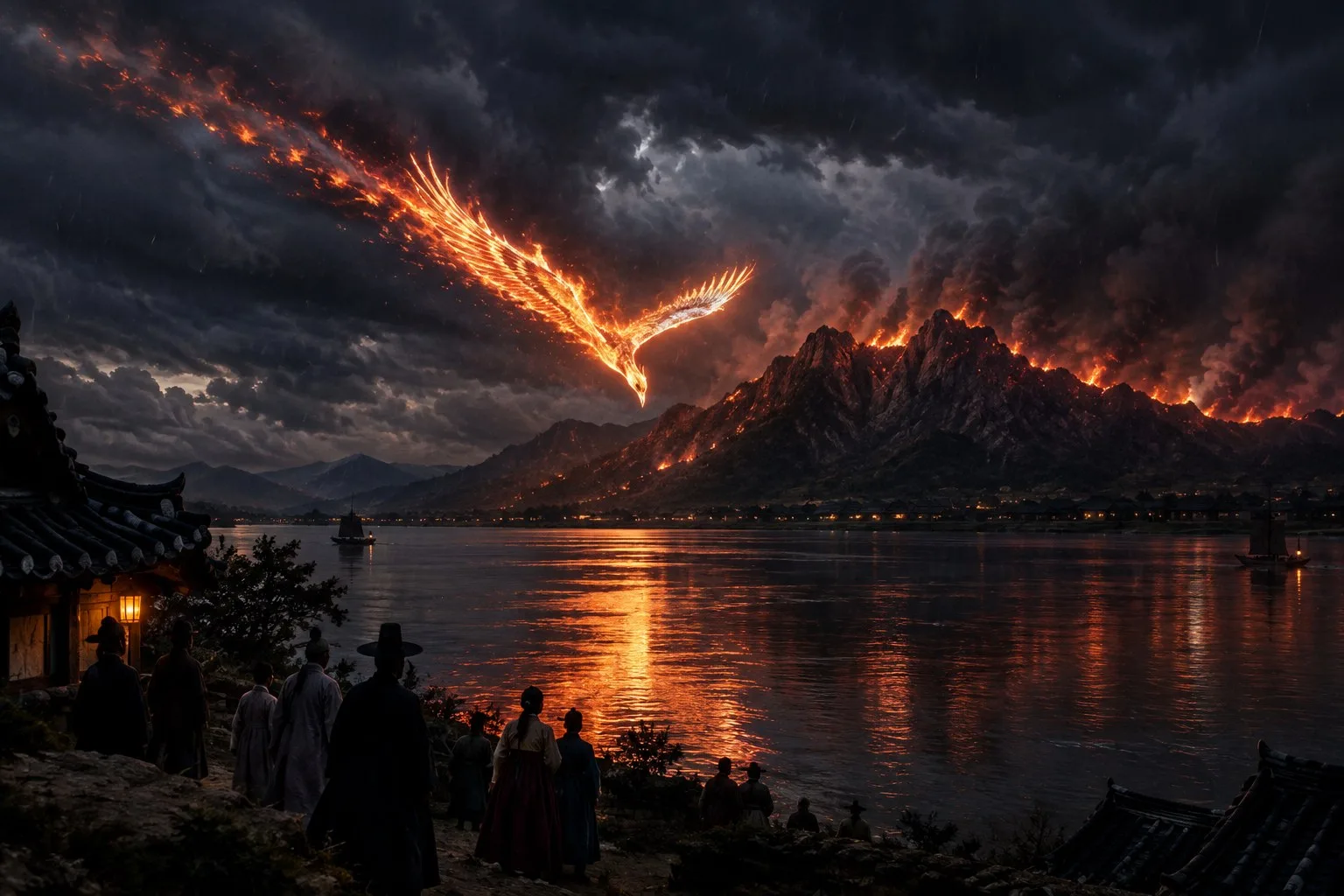
Old Seoul was built to be guarded by four beasts. The Azure Dragon in the east, the White Tiger in the west, the Black Tortoise in the north. And in the south, the Vermilion Bird: Jujak, a bird of fire and summer that, people say, never dies. It only burns and is reborn. Every child in Hanyang knew one more thing. Across the river to the south stands Gwanaksan, a mountain with jagged peaks like flames. Geomancers said its fire energy pointed straight at the palace. So the founders of Joseon wrote the name of the South Gate, Sungnyemun, vertically instead of sideways, so the gate itself would stand like a wall of fire facing the mountain. Fire against fire. And behind the gate, they said, the Bird keeps watch. This is the story of the night it was seen. In the summer of a drought year, a young gate guard named Han Mu-cheol drew the night watch at the South Gate. The older guards gave him one rule. "If you see a red light on Gwanaksan, ring the bell. Do not wait. Do not think. Ring it." "And if I see a red light on the gate?" The old sergeant did not laugh. "Then kneel, and do not look up." For a month, nothing happened. The heat sat on the city like a lid. The wells went low. The wooden houses inside the walls dried until they creaked. Then, on the fifteenth night of the sixth month, Mu-cheol saw it. A thin red line on the ridge of Gwanaksan, far across the river, like a crack in a dark bowl. It grew while he watched. A wildfire, wind behind it, rolling north toward the river and the city of a hundred thousand wooden roofs. He ran for the bell rope. Before he reached it, every torch on the wall went out at once. Not blown out. Pulled out. The flames leaned toward the gate roof, stretched, and vanished upward, as if something above had breathed them in. The air became very hot. Mu-cheol smelled cedar and something like burnt honey. And on the curved roof of Sungnyemun, a light opened. At first he thought the gate was on fire. Then the light lifted its head. It was a bird, larger than the roof itself. Its feathers were not feathers but sheets of flame, red at the root and gold at the tips, each one moving on its own like a living thing. Its tail hung down over the front of the gate in long burning ribbons, and the vertical name plaque glowed beneath it like iron in a forge. Its eyes were white. Not white like snow. White like the very center of a fire. Mu-cheol forgot the sergeant's rule. He looked up. The Bird looked back. It did not feel like being seen. It felt like being weighed, as if the Bird knew every lie he had ever told. Then it spread its wings, and the whole sky over Hanyang turned the color of dawn. It flew south. It did not flap. It simply fell forward into the dark and was across the river in a heartbeat, a streak of light low over the water. People on both banks woke and saw it dive into the burning mountain. There was no sound. Just a flash, as if the sun had risen and set in the same second. Then darkness. Then rain. It rained for three days. The wildfire on Gwanaksan was gone by morning. The wells filled. The drought broke. Mu-cheol was found at dawn kneeling on the gate wall, his hair singed white at the front, his eyes watering, his hands black with soot. He rarely spoke of it. But he served at the South Gate for forty years, and he never let a torch on the wall burn out. When the young guards asked him what it was, he said only this: "Fire does not fear fire. It recognizes it. That is why the Bird stands at the south. Not to fight the mountain. To answer it." And when they asked whether it was still there, he would look up at the gate roof and say nothing at all. In February 2008, Sungnyemun burned. The wooden upper floor was lost in a single night. The name plaque fell from the gate and was found cracked on the ground. The gate was rebuilt, and the restored plaque hangs vertically again, facing Gwanaksan. Some Seoul taxi drivers who work the night shift say that on very hot nights in the sixth lunar month, the roof of the South Gate glows faintly red for a few seconds after midnight. Like an ember someone just breathed on. They say it is only the city lights. - About the legend: Jujak (주작, 朱雀, the Vermilion Bird) is one of the Four Symbols (Sasin) of East Asian cosmology, guardian of the south, summer and fire. The Book of Rites (Liji, "Quli") describes armies arranged with "the Vermilion Bird in front, the Black Tortoise behind, the Azure Dragon on the left and the White Tiger on the right." It is painted on the south wall of 6th-7th century Goguryeo tombs such as Gangseo Great Tomb (UNESCO Complex of Koguryo Tombs). The vertical Sungnyemun plaque and the haetae and Namji pond as guards against Gwanaksan's fire energy are well-known Seoul pungsu traditions (Cultural Heritage Administration; Encyclopedia of Korean Culture). The 2008 fire is historical fact. The guard, the night and the bird's flight are an original story inspired by these traditions.