Rokurokubi: The Heads That Fly at Night
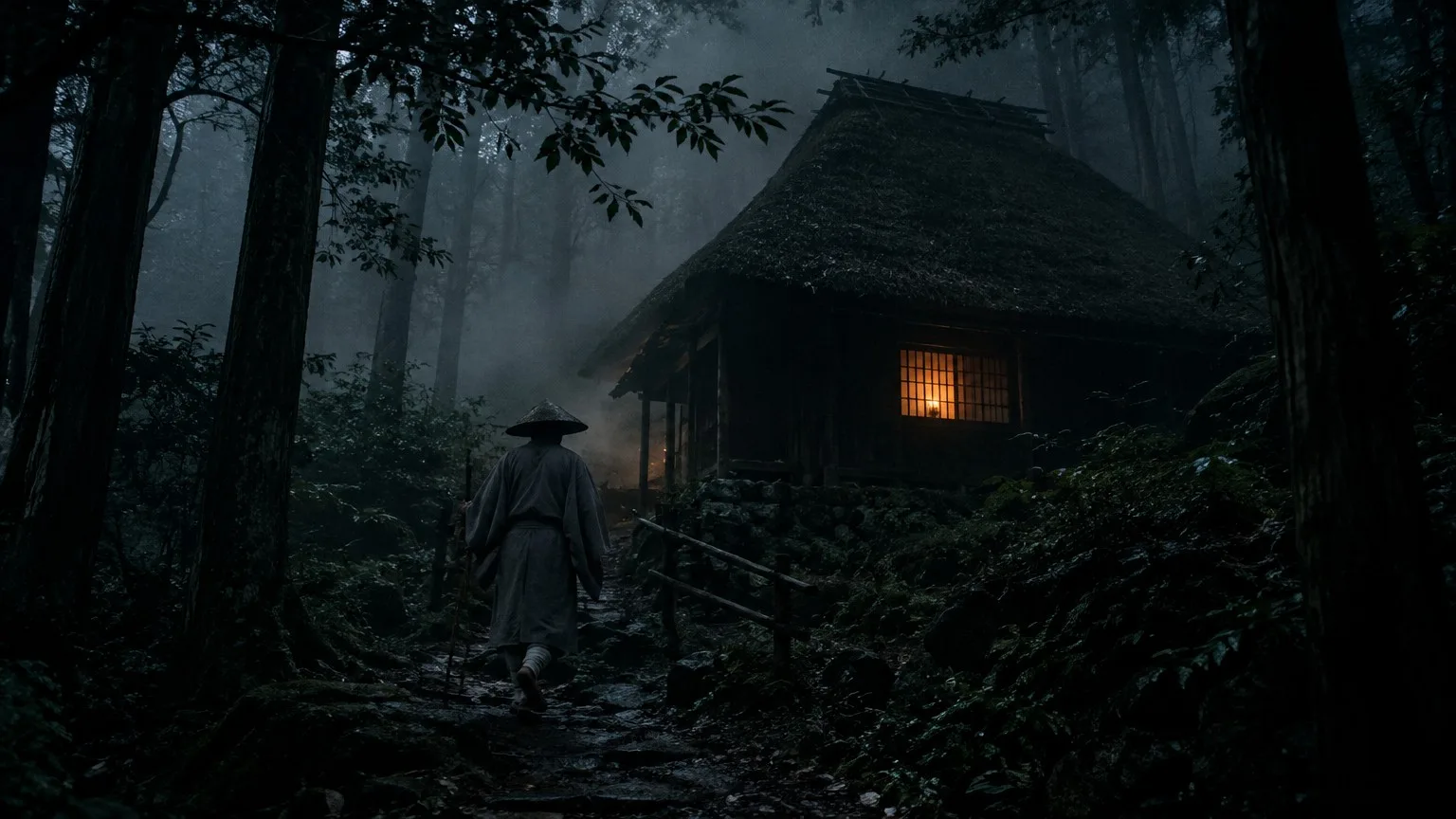
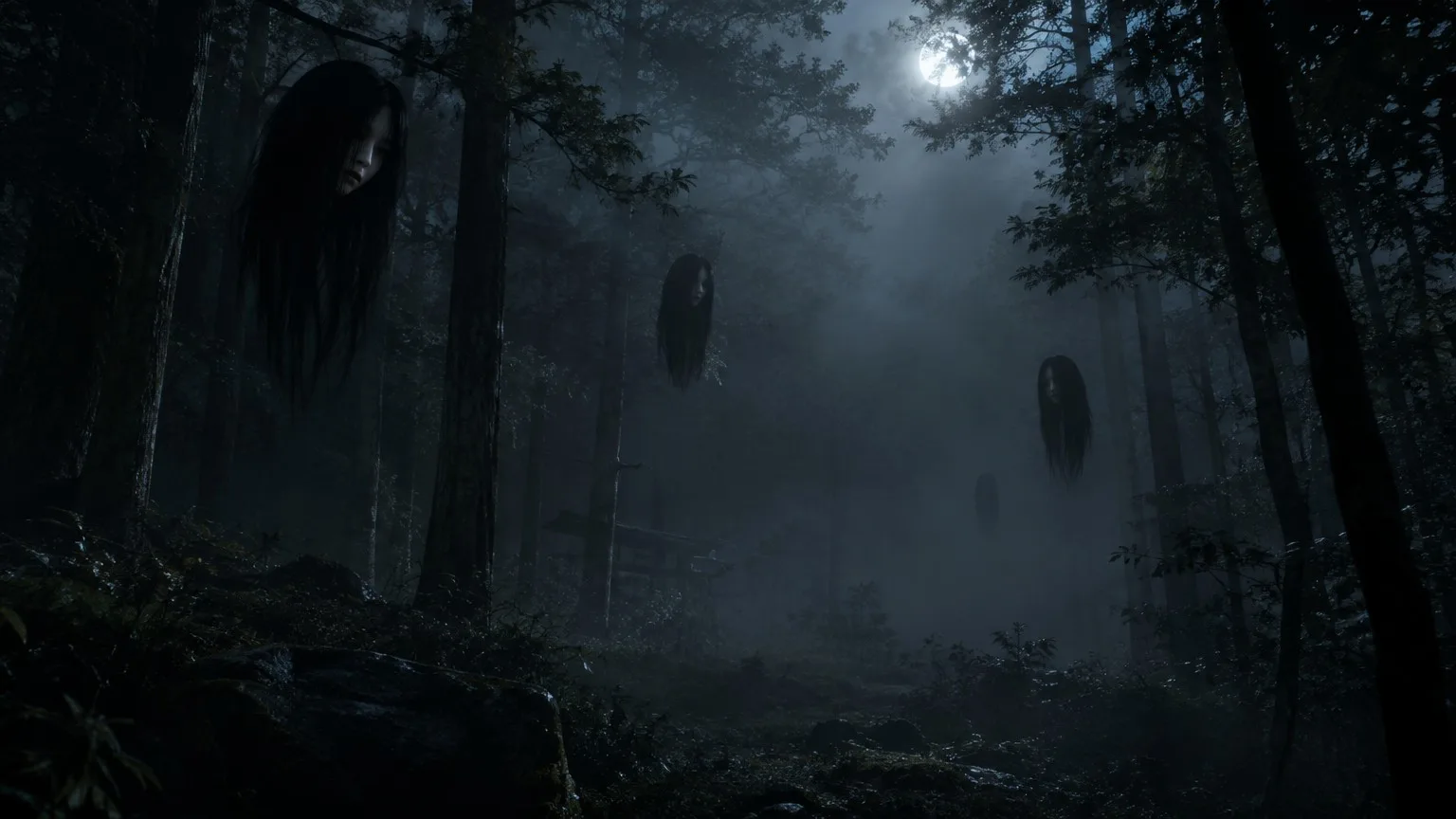
This tale was first written down in English by Lafcadio Hearn in his 1904 book "Kwaidan." He heard it in Japan, where it was already old. --- There was once a samurai named Isogai who, after his lord's house fell, shaved his head and became a wandering priest called Kwairyo. But he had been a warrior too long to be afraid of anything, and he liked to sleep outdoors in wild places that ordinary priests avoided. One evening, in the mountains of Kai province, a woodcutter found him lying on the grass by the road. "You can't sleep here," the woodcutter said. "This place is full of goblins. Come to my house. It's only a hut, but it has a roof." Kwairyo followed him up a narrow path through the forest to a small house with a light in the window. Inside, four men and women sat around the fire. They welcomed him warmly and gave him a room at the back. He noticed they were all very polite. He noticed they spoke like educated people, not like woodcutters. He thought it was a little strange, but he was tired. --- Late at night, he woke up thirsty. He got up quietly to drink from the stream behind the house, and on the way he passed the main room. By the light of the dying fire, he saw five bodies lying on the floor. None of them had a head. There was no blood. The necks ended in smooth, clean stumps, as though the heads had never been there at all. Kwairyo stood very still. He remembered what he had once read in an old book. There is a kind of goblin called a rokurokubi. By day it looks like an ordinary person. At night, its head leaves its body and flies through the dark, hunting. And if, while the head is gone, someone moves the body, the head can never return to it. It will bounce three times on the ground, like a ball, and die. Kwairyo took the woodcutter's body by the feet, dragged it to the window, and pushed it out into the night. Then he went out the back door. --- He followed the sound of voices into the trees. In a small clearing, five heads were floating in the air, chattering and laughing, catching insects and eating them. "That traveling priest," said the woodcutter's head. "Isn't he fat? When we've eaten him, our bellies will be full. Go and see if he's asleep." A woman's head flew off toward the house. A moment later it came back, screaming. "He's gone! And the master's body is gone too!" The woodcutter's head went horribly still. Its hair stood straight up. Its eyes bulged. It began to grind its teeth. "Since my body has been moved," it shrieked, "it is not possible for me to rejoin it. I must die. And all because of that priest! Before I die, I will get at him. I will tear him!" And then it saw Kwairyo standing beside a tree. All five heads flew at him at once. --- Kwairyo was a samurai. He tore a young tree out of the ground and swung it like a club. He knocked the heads out of the air one after another until four of them fled into the dark. But the woodcutter's head would not stop. It hurled itself at him again and again, and at last it caught the left sleeve of his robe in its teeth and bit down. Kwairyo seized it by the hair and beat it until it stopped moving. But it never opened its jaws. At dawn, Kwairyo walked down out of the mountains and into the nearest town, with a human head still clamped by its teeth to his sleeve, swinging gently as he walked. The townspeople screamed. The police arrested him. They thought he was a murderer, until a wise old judge looked closely at the head and saw the strange red marks on the back of its neck. The marks of a rokurokubi. They let him go. Kwairyo kept the head. He said it was a fine souvenir. And for the rest of his life, he never again accepted a stranger's offer of a warm bed in the mountains. — Rokurokubi (ろくろ首) are classic Japanese yōkai. This story is retold in English from Lafcadio Hearn's public-domain collection "Kwaidan: Stories and Studies of Strange Things" (1904).