Korean Ghosts and Monsters: 18 Types Explained
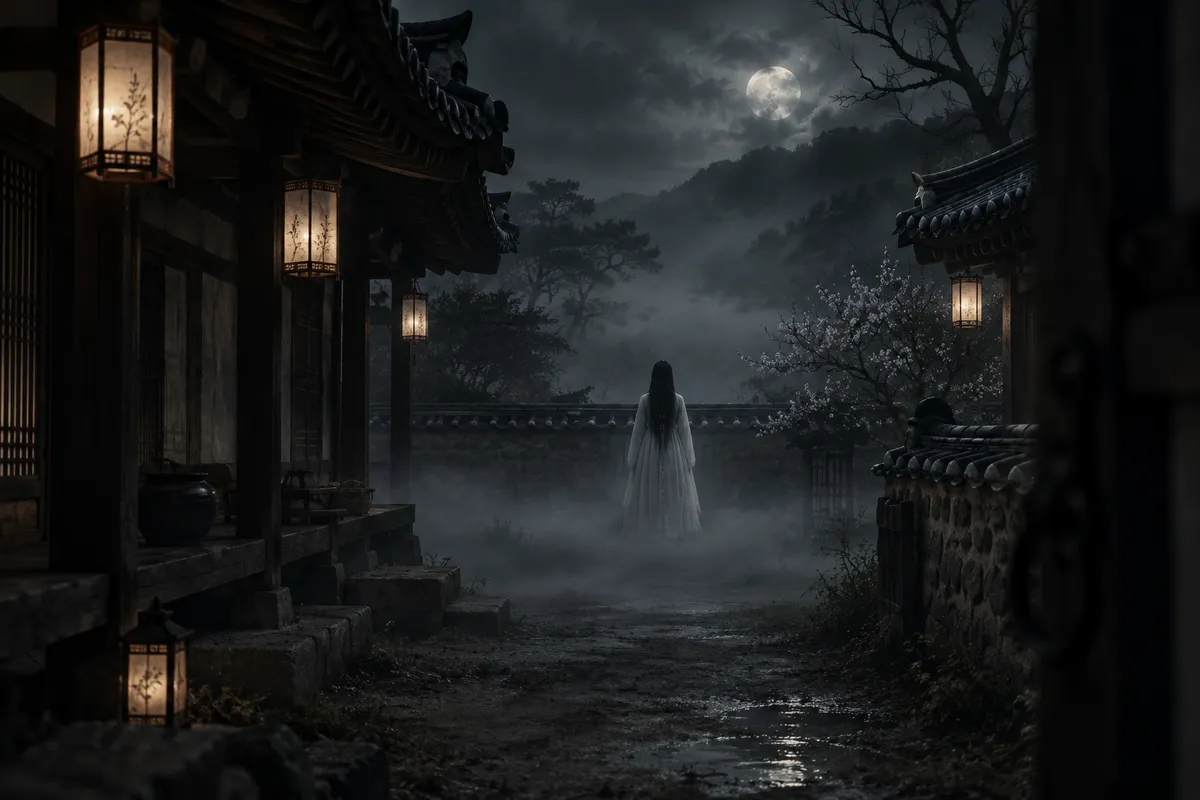
Korean ghosts are called gwisin (귀신), and Korean folklore also has goblins, shape-shifting foxes, and beasts that eat iron. If you have watched a K-horror film or a K-drama about spirits and wondered "what was that?", this list is for you. Below are 18 types, from the most famous to the strangest. For each one we say where the idea comes from and what is folklore, what is modern invention, and what is rumor. Items marked with a link have a full page on Unnlog. ▶ Ghosts of people (gwisin) 1. Cheonyeo gwisin (처녀귀신) – the virgin ghost The most iconic Korean ghost: a young woman in a white mourning dress with long, loose black hair. She is said to be a woman who died unmarried, carrying han (deep, unresolved sorrow). Her famous look was fixed largely by 20th-century film and TV, not by old records. Full page: https://unnlog.com/legend/cheonyeo-gwisin 2. Mongdal gwisin (몽달귀신) – the bachelor ghost The male counterpart: the spirit of a young man who died before marrying. He is less famous in pop culture but common in folk belief. Families sometimes held "spirit weddings" (yeonghon gyeolhonsik) to give such souls peace, a custom that still exists in small numbers today. 3. Mul gwisin (물귀신) – the water ghost The ghost of someone who drowned. It is said to grab swimmers by the ankle and pull them under so it can take their place. Korean parents still use it to warn kids away from deep rivers and valleys, and "to drag someone down like a water ghost" is an everyday expression for blaming others. 4. Dalgyal gwisin (달걀귀신) – the egg ghost A ghost with a smooth, blank face: no eyes, no nose, no mouth, like an egg. It is a classic of children's ghost stories. Japan has a very similar faceless spirit called nopperabō, and it is not clear which story influenced the other. 5. Son-gaksi (손각시) – the bride who never married Another ghost of a young woman who died before marriage, often described as one of the most vengeful spirits in shamanic belief. In many regions son-gaksi and cheonyeo gwisin overlap, and the name used depends on the area. 6. Gaekgwi (객귀) – the wandering ghost The spirit of someone who died far from home, with no family to perform rites. People believed a gaekgwi could cause sudden illness. A folk cure called gaekgwi mulligi, in which food was thrown outside to chase the spirit off, was practiced in villages until fairly recently. 7. Jeoseung saja (저승사자) – the grim reaper The messenger who comes to lead the dead to the afterlife, often in groups of three in old paintings. The modern image of a pale man in a black hat (gat) and black robe was shaped mostly by TV dramas, and K-dramas since have made him almost charming. ▶ Goblins, foxes and shape-shifters 8. Gumiho (구미호) – the nine-tailed fox A fox that lives long enough to grow nine tails and turn into a beautiful woman. Korean tales say she keeps a magic fox bead (yeou guseul), and in many versions she wants to become human. The nine-tailed fox first appears in old Chinese texts, but the Korean gumiho is usually more dangerous than the Chinese or Japanese foxes. 9. Dokkaebi (도깨비) – the Korean goblin Not a ghost at all. Dokkaebi are mischievous goblins said to be born from old household objects like a broom or a pestle. They love wrestling (ssireum) and buckwheat jelly, they can be tricked, and their magic club (bangmangi) can make gold appear. They are more trickster than monster. 10. Dokkaebi bul (도깨비불) – goblin fire Pale blue lights drifting over fields and graves at night. Elders blamed goblins. Scientists point to gases from wetlands and decaying matter, though the exact cause is still debated. Full page: https://unnlog.com/legend/dokkaebi-fire 11. Eoduksini (어둑시니) – the darkness that grows A shadow creature that grows bigger the more you look up at it and fear it, and shrinks if you look down and ignore it. It is a perfect metaphor for fear itself. Fun fact: Eoduksini is also the name of Unnlog's official account. 12. Changgwi (창귀) – the tiger's slave ghost The ghost of a person eaten by a tiger. It is said to serve the tiger and lure new victims to it, sometimes by calling out in a familiar voice. In the age when tigers really did hunt people in Korea's mountains, this was one of the most feared spirits. 13. Jangsan beom (장산범) – the Tiger of Mount Jangsan A white-furred creature from Mount Jangsan in Busan that copies human voices to lure people. Note: this is a modern internet legend that spread online in the early 2010s, not old folklore. It was turned into the 2017 film The Mimic. ▶ Beasts and guardians 14. Bulgasari (불가사리) – the iron eater A monster that eats iron, needles and weapons and grows bigger with every bite. Its name is often explained as "cannot be killed (except by fire)". Legends place it at the end of the Goryeo dynasty, and it inspired the 1985 North Korean film Pulgasari. 15. Imugi (이무기) – the dragon that is not yet a dragon A giant serpent that must wait, often said to be a thousand years, or find a magic pearl before it can rise as a true dragon. An imugi that fails becomes bitter and dangerous. The 2007 film D-War is based on this idea. 16. Bulgae (불개) – the fire dogs In an old tale, the king of a dark land sends fire dogs to steal the sun and the moon. They bite but cannot hold on because the sun is too hot and the moon too cold. That bite was the old Korean explanation for solar and lunar eclipses. 17. Haetae (해태) – the guardian A lion-like beast that can tell right from wrong and is believed to guard against fire. You can still see haetae statues in front of Gwanghwamun gate at Gyeongbokgung Palace, and it is an official symbol of Seoul. Not every Korean creature is scary. ▶ One more: the words themselves 18. Gwi, gwisin, akgwi, gwimae If you heard these words in a K-drama, here is the short version. Gwi (귀) is the old word for a ghost or spirit. Gwisin (귀신) is the everyday word for ghost. Akgwi (악귀) means an evil spirit, the kind that possesses people in K-occult stories. Gwimae (귀매) is an old word for ghosts and goblin-like spirits together. ▶ Quick answers Are Korean ghosts always women? No, but the most famous one is. Cheonyeo gwisin dominates films, while male ghosts like mongdal gwisin are less known. Why do Korean ghosts wear white? White was the color of mourning clothes in Korea. Dressing a ghost in white shows she is part of a funeral that never ended. Which ones are real folklore and which are modern? Dokkaebi, gumiho, mul gwisin, changgwi, bulgasari and haetae all come from older tradition. The look of cheonyeo gwisin and jeoseung saja was shaped by 20th-century screens, and Jangsan beom is an internet legend. ▶ Keep reading The legend of Arang: https://unnlog.com/talk/118 The Woman on Yeowoo Pass: https://unnlog.com/talk/115 The Red Bird of the South Gate: https://unnlog.com/talk/161 All legends on Unnlog: https://unnlog.com/legend Did your grandparents tell you about a ghost that is not on this list? Share it in the comments.