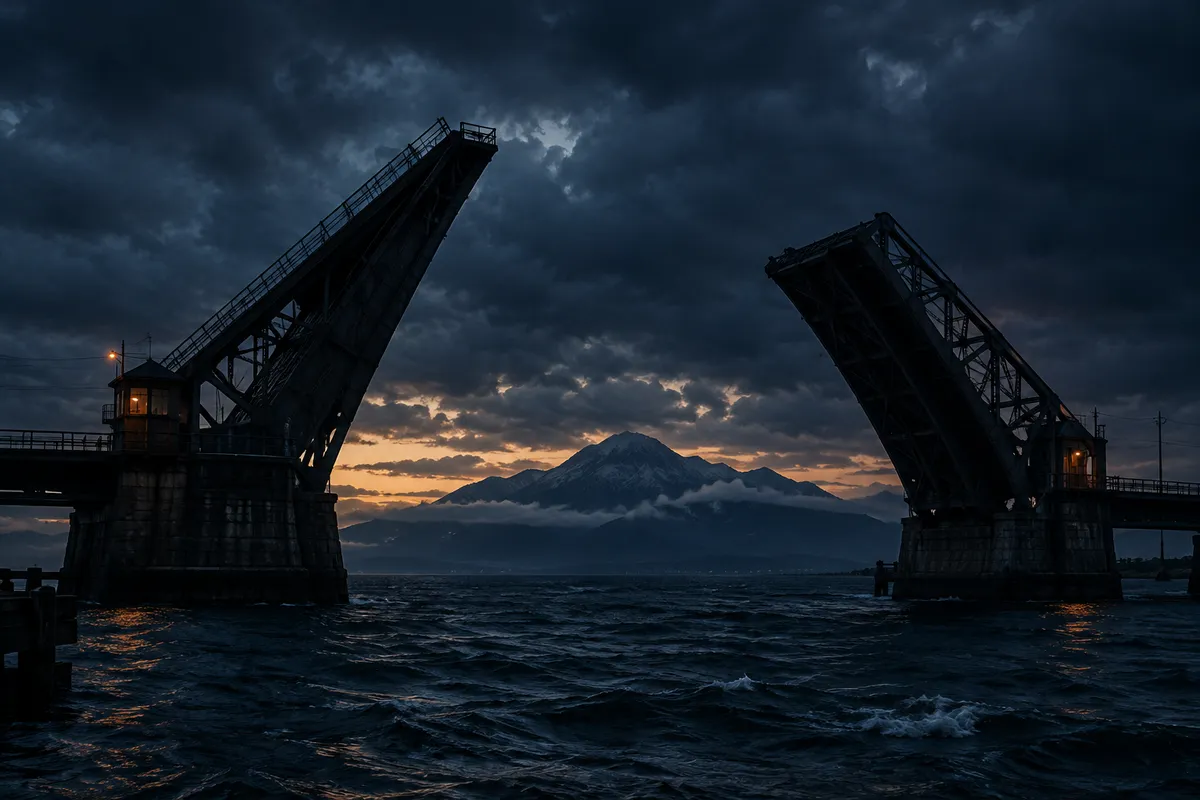
Yeongdo Bridge and the Grandmother Who Calls You Back
Grow up in Busan, South Korea, and sooner or later someone tells you: "If you leave Yeongdo, you'll be ruined within three years." Yeongdo is an island connected to the city by a bridge, and that bridge carries deep memories of war and separation. Here's the legend of the Yeongdo Grandmother, and the real history of Yeongdo Bridge, kept clearly apart. ▶ What is Yeongdo Bridge? The bridge's official name is Yeongdo Daegyo. According to the Busan city government, it opened in 1934 and is about 214.7 meters long. It was first named "Busan Bridge," but everyone called it Yeongdo Bridge, and when a new Busan Bridge was built nearby in 1982, the name officially changed. Its most famous feature: it's a bascule bridge, with one section that lifts into the sky so large ships can pass. According to the Seoul Shinmun, it was Korea's first single-leaf bascule bridge. As traffic grew and water pipes were laid under it, the lifting stopped in September 1966. ▶ The legend These are the stories that follow the bridge and the island: - A mountain goddess, a grandmother spirit living on Mount Bongnaesan in Yeongdo, loves the island's people so much that anyone who leaves is ruined within three years, so they'll come back. - That's why people who leave Yeongdo end up returning. - A rock near the top of Bongnaesan, called Halmae Bawi (Grandmother Rock), is linked to her. This is an oral folk legend. There are no records tying it to any specific person or event. Treat "leave and be ruined" as legend only. ▶ Fact 1: a meeting place for war refugees There's a real reason the bridge is remembered with sadness. During the Korean War, huge numbers of refugees fled south to Busan. Families separated in the chaos promised each other: "If we survive, let's meet at Yeongdo Bridge." The city of Busan describes the bridge as the place where separated families came to find each other. Fortune tellers set up shop under the bridge. According to CBS Nocut News, there were once close to 50 of them, forming a whole "fortune tellers' alley," visited by people asking for news of lost relatives. The famous song "Be Strong, Geum-sun" by singer Hyun In captures a refugee standing on Yeongdo Bridge, longing for someone lost during the evacuation from Hungnam. ▶ Fact 2: the bridge that lifted again after 47 years After widening and restoration work, the bridge lifted again on November 27, 2013, for the first time in 47 years. Lifting events are still held at set days and times; check Busan city or Yeongdo district notices before you go, since times can change. The bridge was designated a Busan cultural heritage monument in 2006, which is why the renovation restored its lifting function instead of replacing it. It now lifts only briefly, like a show, but crowds still gather on both sides to watch, just as they once did. ▶ Why did the Grandmother legend appear? A Segye Ilbo travel feature suggests that on an island where people were precious, a story like this may have grown to keep residents from leaving. Missing those who left turned into "the grandmother calls them back." It sounds like a curse, but at heart it's a legend about not wanting to let people go. ▶ Before you visit Yeongdo Bridge carries both cars and pedestrians. During lifting events, watch only from the designated areas and don't climb or lean on the railings. The trail toward the top of Bongnaesan gets dark and slippery after sunset, so go during the day. Prayer sites and shrines on the mountain are still meaningful to people; please don't touch them for fun or film them carelessly. ▶ Why the story feels sad, not scary The more you hear about Yeongdo Bridge, the less it feels like a ghost story. During the war, people came to the bridge day after day, searching for one familiar face among thousands of strangers. Those who visited fortune tellers weren't curious about the future so much as desperate for any news that a family member might be alive. So the stories around the bridge are less about ghosts and more about the longing of that time. Even the Grandmother legend, about calling people back to the island, may echo the memory of a place that saw so many separations. ▶ Fact or rumor? Will you be ruined if you leave Yeongdo? Legend only, with no records behind it. Was the bridge a real reunion place for war refugees? Yes, well documented. Have you heard a version of the Yeongdo Grandmother story? Tell us in the comments, and explore more places on our map: https://unnlog.com/map Korean urban legends, 15 stories: https://unnlog.com/talk/182 Sources: Busan city refugee-capital heritage guide, "Yeongdo Bridge"; Seoul Shinmun (Nov 27, 2013); CBS Nocut News (Jan 2014); Segye Ilbo Yeongdo travel feature (Sep 2016). Local legends are labeled as such.