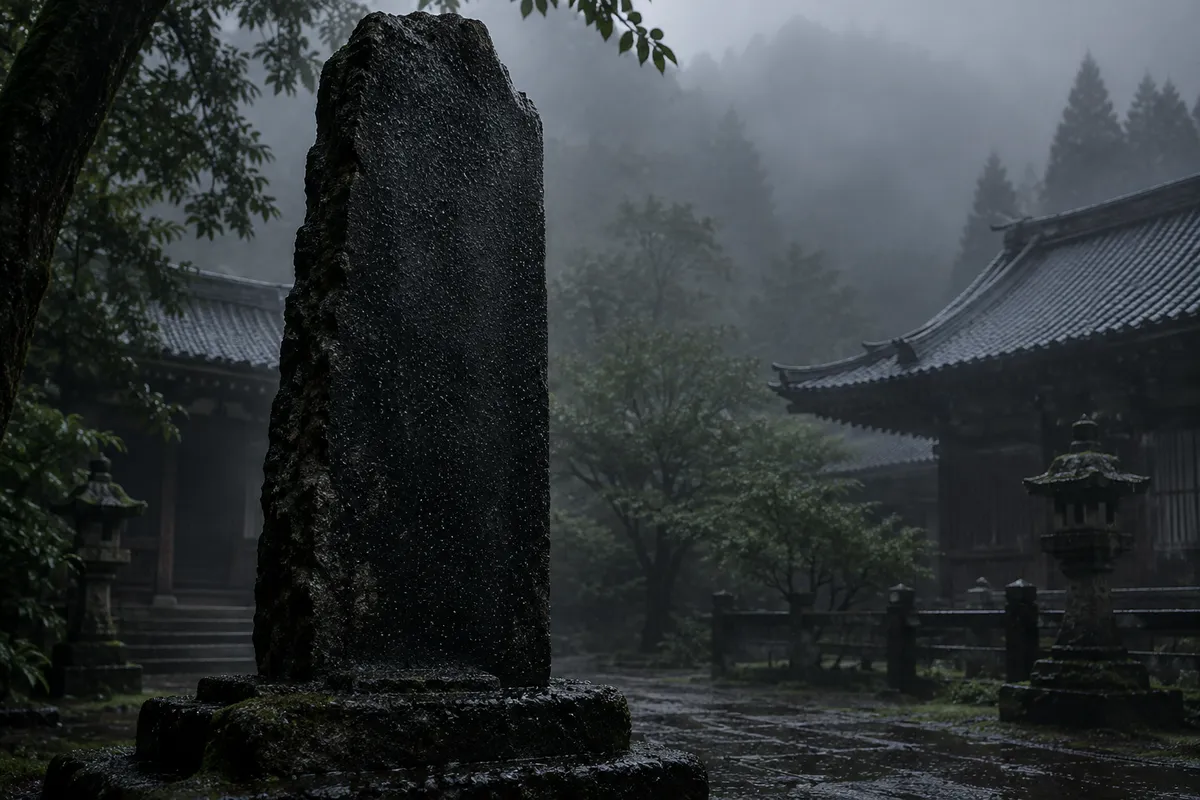
The Sweating Stone of Miryang and Korea's Three Mysteries
In Miryang, a small city in South Korea, there's a stone monument that is said to "sweat" whenever the country is about to face a disaster. Nearby there's a valley where ice forms in midsummer, and a temple slope covered in boulders that ring like bells when you tap them. Locals call them the Three Mysteries of Miryang. Here's what the legends say, and what reporting and research can actually confirm. ▶ Pyochungbi, the sweating stone Pyochungbi is a stone monument in Muan-myeon, Miryang. It was erected in 1738 to honor Samyeong Daesa, a Buddhist monk who led warrior monks against the Japanese invasions of the 1590s. According to a column in the Korea JoongAng Daily, it's about 3.9 meters tall and made of a dark stone called diabase. ▶ The legend: it sweats before national crises The stories passed down locally say: - The stone sweated in 1910 when Korea lost its sovereignty, in 1919 during the March 1st independence movement, and in 1945 at liberation. - Just before the Korean War broke out in 1950, it sweated more than ever. - Since then, drops have appeared on it whenever something big happens to the nation. These are local traditions, not scientific measurements made at the time. Even the numbers differ between articles. ▶ What's confirmed: water really does form on it The fact that drops form on the stone's surface has been seen by many people and photographed. Scientists usually explain it as condensation. In the same column, an atmospheric science professor at Pukyong National University explains that when hot, humid air touches a cold stone surface, water forms, and diabase is a stone that cools easily, so this happens more readily. It's the same reason a cold glass gets wet on the outside. Some people object that the stone sometimes stays dry even in the humid rainy season, so condensation can't explain everything. That's why it's still called a "mystery." But if it's condensation, long-term weather and temperature records would show when it happens, and such data isn't widely published. The "only before national crises" part may simply be memory at work: we remember the times it matched and forget the rest. ▶ Eoreumgol, the valley that freezes in summer Eoreumgol ("Ice Valley") sits on the slopes of Mount Jaeyaksan and is a designated Natural Monument. Ice is said to form there in summer, while in winter warm air rises from the rocks. A 2021 YTN news report measured about 7°C inside the valley while the air outside was close to 30°C. The explanation is not a curse but the landform: a talus slope, a hillside of piled boulders. Korean research papers point to air circulation as the most likely cause. In winter, cold air sinks into the gaps between the rocks and stays trapped, then flows out at the bottom in summer. Recently there's been concern that climate change is making the ice melt sooner. ▶ Maneosa, the ringing rocks In front of Maneosa temple, a slope is covered in boulders that look like a frozen river. Legend says they were fish that followed a monk from the sea to hear his teachings and turned to stone. Some of the rocks ring with a clear metallic sound when tapped. According to the Encyclopedia of Korean Culture, the site became a Natural Monument in 2011 as the "Manosan block stream of Miryang." It formed during the ice age, when repeated freezing and thawing slowly moved boulders down the slope. The ringing stones are ones resting lightly on top of others. ▶ Before you visit All three sites are open to visitors, but they are protected heritage sites and natural monuments. Don't touch or scratch Pyochungbi, and stay on marked paths at the ice valley and the boulder field. The gaps between rocks are deep and slippery and you can easily hurt yourself. Hitting the rocks hard with other stones can damage them. ▶ What the three have in common Put the three side by side and you see a pattern. Each started as something people couldn't explain, so stories attached to it: the fate of the nation, fish turned to stone, the spirit of the mountain. Over time, science added explanations: condensation, air circulation, ice-age landforms. That doesn't make the old stories wrong. The sweating stone carries the feelings of people who remembered Samyeong Daesa whenever the country was in trouble, and the fish legend carries the imagination of a region between sea and mountains. Even knowing how they work, they're still strange to see in person. That's the real charm of Miryang's three mysteries. ▶ Fact or rumor? Does the stone really get wet? Yes, drops have been widely observed. Does it only happen before national disasters? That part is legend, with no systematic records behind it. Have you visited any of these places, or heard a version of the sweating stone story? Tell us in the comments, and find more places on our haunted and mysterious places map: https://unnlog.com/map Sources: Korea JoongAng Daily, "[Viewpoint] Sweat from the soul"; Maeil Shinmun Miryang travel feature (Dec 2018); YTN report on Eoreumgol (Jul 25, 2021); Encyclopedia of Korean Culture, "Manosan block stream of Miryang"; Korean research on talus cold-air phenomena (KoreaScience). Local traditions are labeled as such.