No.003 · 🇰🇷 Korea · Ghosts
Cheonyeo Gwisin (Virgin Ghost)
처녀귀신
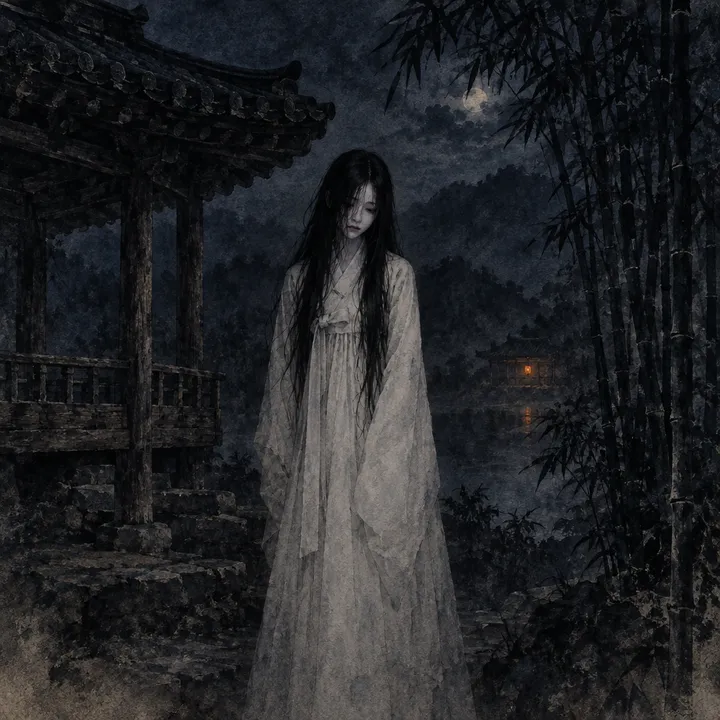
The ghost of a young woman who died unmarried, carrying deep resentment (han). With long black hair and a white mourning dress, she is the most iconic ghost in Korean horror.
What it looks like
A pale young woman in a white sobok (mourning dress), with long, loose black hair covering part of her face. Traditionally an unmarried woman wore her hair in a single long braid, so the loose hair itself is a sign that something is wrong.
Where it appears
The place where she died or was wronged: an old pavilion, a well, a bamboo grove, a lonely government office. She often appears at night to one person at a time.
What it does
In Joseon-era thinking, marriage completed a person's life. A woman who died before marrying was believed to stay restless, unable to rest among the ancestors, and her han could bring sickness or misfortune to a village.
The best-known tale is the Arang legend of Miryang. A magistrate's daughter named Arang was attacked and murdered, and her body hidden. Every new magistrate who came to Miryang died of fright on his first night, until a brave one listened to her ghost, found the killer and buried her properly. A shrine to her, Aranggak, stands near Yeongnamnu Pavilion today.
Weakness & protection
She is not driven away so much as set free. In the tales, her ghost rests once the truth comes out and her han is resolved.
Folk practice included a spirit wedding (영혼결혼식) that married the dead woman to a dead man, so her life would be “completed” and she could move on.
Where it came from
The idea grew from Confucian family values of the Joseon dynasty, where a person without a spouse or descendants had no one to perform memorial rites for them.
The white dress and long hair became the standard horror look through 20th-century Korean films and TV, especially the long-running series “Hometown of Legends” (전설의 고향).
Fact check
- Is the Arang story true?
- Arang is a legend, not a recorded historical case, but the shrine and the pavilion in Miryang are real places, and the story is still honored at Miryang's local festival.
- Why white clothes?
- White was the color of mourning and burial clothes in Korea. A ghost dressed in white is a woman dressed for death.
📖 Read the full legend: Cheonyeo Gwisin (Korean Maiden Ghost)
More from 🇰🇷 Korea
- Gumiho A fox that has lived a thousand years and grown nine tails. In Korean folklore…
- Dokkaebi Korea's most famous folk spirit. A dokkaebi is less a demon than a tricky, play…
- Haetae (Haechi) A mythical beast that can tell right from wrong and guards against fire. Its st…