No.032 · 🇸🇦 Arabia · Undead
Ghoul
غول
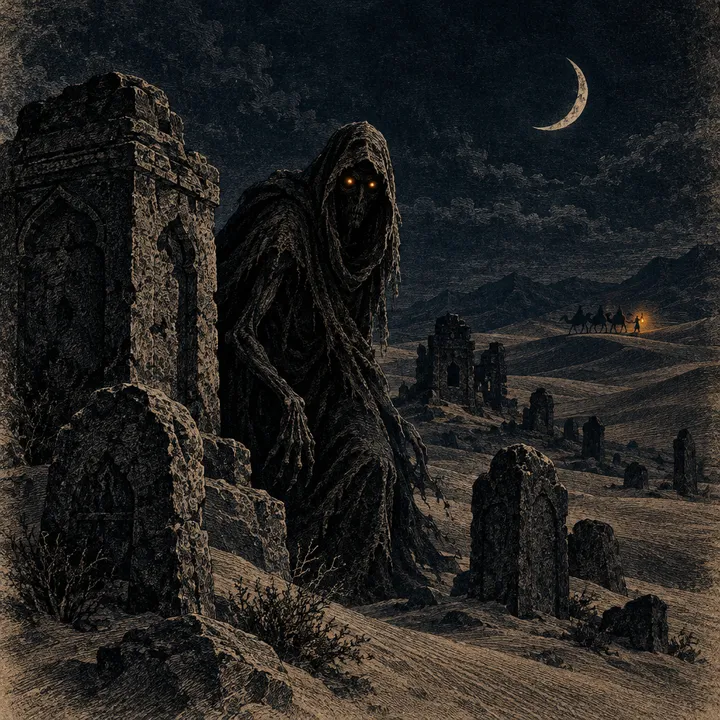
The ghoul (ghūl) is a monster of old Arabian folklore that haunts deserts and graveyards, lures travelers astray and feeds on the dead. In the West it became the classic grave-robbing corpse eater.
What it looks like
In Arabian tales it can change shape, often appearing as a woman or an animal such as a hyena, but its feet stay like a donkey's hooves. Western images show a gaunt, grey, corpse-like creature.
Where it appears
Lonely deserts, ruins and graveyards, especially at night along caravan routes.
What it does
The ghoul calls to travelers in a friendly voice or a familiar form and leads them off the road into the desert.
The female ghoul, ghūla, is a common figure in Arabic folktales, sometimes frightening and sometimes tricked by clever heroes.
Weakness & protection
A famous belief says a ghoul dies from a single blow. If you strike it a second time, it comes back to life, so you must hit only once.
Where it came from
The ghūl was part of pre-Islamic Arabian belief and is often counted among the jinn. It appears in old Arabic poetry and in the 'One Thousand and One Nights'.
Antoine Galland's 18th-century French translation of the Nights brought the word into European languages, where 'ghoul' came to mean a corpse-eating creature of the grave.
Fact check
- Is a ghoul undead?
- In Arabian lore it is a demon-like jinn. In Western stories it is a corpse-eating undead, which is why it is often grouped with the undead today.
- Is the 'ghūl' in modern Arabic?
- Yes. The word is still used for monsters and bogeymen in Arabic-speaking countries.
More from 🇸🇦 Arabia
- Jinn Jinn are invisible beings of Arabian belief, said to be made from smokeless fir…