No.022 · 🇸🇦 Arabia · Spirits & yokai
Jinn
جن
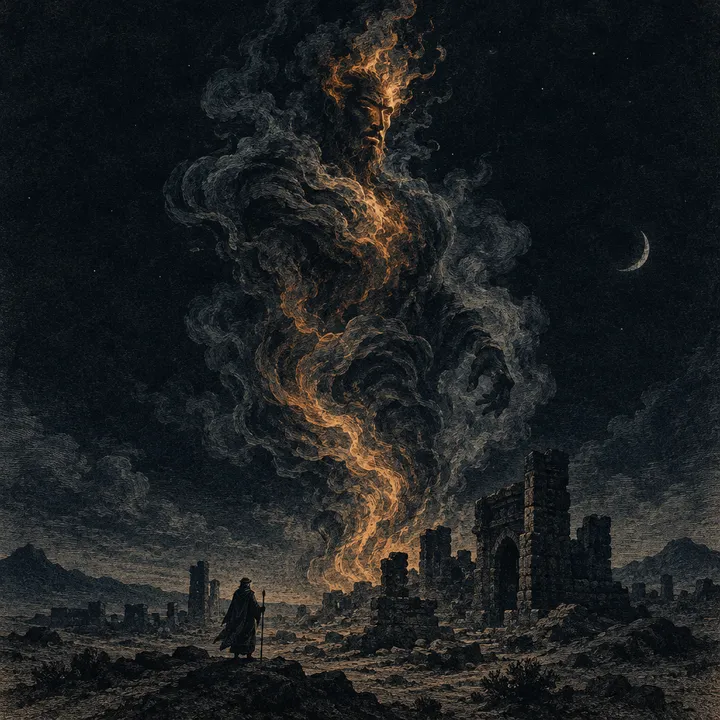
Jinn are invisible beings of Arabian belief, said to be made from smokeless fire. Like people, they can be good or bad, and they live in a hidden world alongside ours. The word 'genie' comes from them.
What it looks like
Usually invisible. When they show themselves, tales say they may take the form of animals such as snakes, dogs or cats, of people, or of whirlwinds and smoke.
Where it appears
Deserts, ruins, wells, caves, graveyards and other lonely or dirty places, especially at dusk and night.
What it does
Jinn have free will. They eat, marry and have families, and some are believers while others are not. Folklore names powerful kinds, such as the ifrit and the marid.
In folk belief they can cause illness, bad luck or possession, but many stories also show jinn helping or bargaining with humans.
Weakness & protection
In Muslim tradition, people recite protective verses and say the name of God before entering a house or eating, which is believed to keep troublesome jinn away.
Where it came from
Belief in jinn existed in pre-Islamic Arabia and continued in Islam, where jinn are mentioned in the Qur'an. Jinn beliefs are found across the Middle East, North Africa and South and Southeast Asia.
The 'One Thousand and One Nights' made jinn famous worldwide. The Aladdin story with its lamp genie was added by the French translator Antoine Galland in the 18th century.
Fact check
- Is a genie a jinn?
- Yes. 'Genie' is the European form of the word, but the wish-granting genie in a lamp is mostly a storybook idea.
- Are all jinn evil?
- No. In tradition they are like humans: some good, some bad, most somewhere in between.