No.070 · 🇭🇹 Haiti · Undead
Zombi
Zonbi
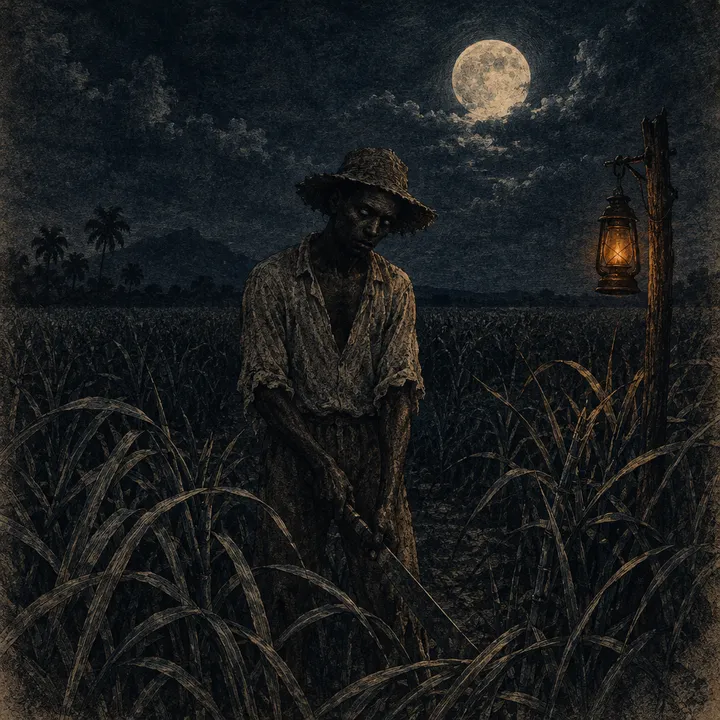
In Haitian folklore, a zombi is a person who has died and been brought back by a sorcerer (bokor) as a will-less worker. This belief, not the brain-eating horror monster, is the origin of the word 'zombie'.
What it looks like
A quiet person with an empty stare and slow movements, obeying orders without a will of their own. There is nothing gory about the folk zombi.
Where it appears
Fields and remote places in rural Haiti, where the zombi is said to be made to work.
What it does
The fear of becoming a zombi is closely tied to the memory of slavery in Haiti: losing your freedom and will even in death.
Folklore also speaks of the zombi astral, a captured soul that a sorcerer can keep or sell.
Weakness & protection
A famous belief says that if a zombi tastes salt, it wakes up, understands what has happened and returns to its grave or tries to take revenge on the bokor.
Where it came from
Zombi beliefs are part of Haitian folklore and are separate from the religion of Vodou itself, though outsiders often mix them up. An old Haitian law even treated using substances to make someone seem dead before burial as a crime.
In the 1980s, researcher Wade Davis studied the case of Clairvius Narcisse, a man who claimed to have been zombified, and suggested a powder with nerve toxins was used. His conclusions are still debated. Hollywood later turned the zombi into the flesh-eating zombie.
Fact check
- Is a Haitian zombi like a movie zombie?
- No. The folk zombi is a victim, a person whose will has been taken, not a monster that eats people.
- Is the zombi part of Vodou?
- It belongs to Haitian folklore and fears of sorcery. Many practitioners stress that Vodou is a religion, not zombie-making.