No.059 · 🇨🇦 Canada · Demons
Wendigo
Wīhtikow / Wiindigoo
The wendigo is a being from the traditions of Algonquian-speaking peoples such as the Ojibwe, Cree and Innu. It is tied to winter, starvation and endless greed, and is said to never be satisfied however much it eats.
What it looks like
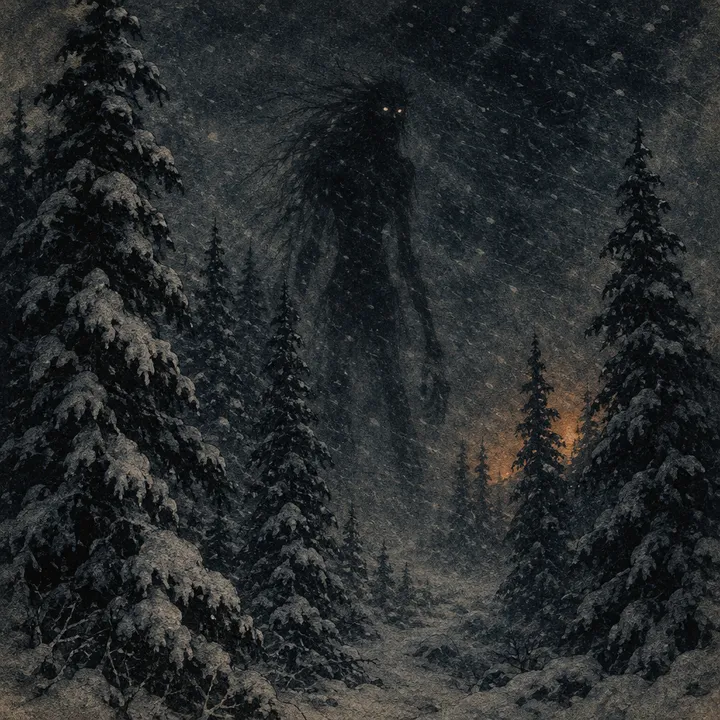
Traditional descriptions vary: often a gaunt giant with ash-grey skin stretched over bones, sometimes with a heart of ice. The popular image of a deer skull with antlers comes from modern pop culture, not from traditional stories.
Where it appears
Frozen northern forests of Canada and the Great Lakes region, especially in hard winters.
What it does
In traditional teaching, a person can become a wendigo through extreme greed or by eating human flesh in famine. The more it eats, the larger and hungrier it grows.
The wendigo is also used as a powerful image for selfishness that destroys a community.
Weakness & protection
Stories speak of fire, strong spiritual help and community, and above all of not giving in to greed. Details belong to each nation's own traditions.
Where it came from
Wendigo stories were recorded by European traders and missionaries from the 17th century, but they belong to living Indigenous traditions that are best learned from those communities.
Writers such as Algernon Blackwood ('The Wendigo', 1910) spread a Western version, and the creature now appears in many horror games, films and TV shows.
Fact check
- Is the deer-skull wendigo traditional?
- No. That look is a modern invention of pop culture and is not part of most Indigenous accounts.
- Why is respect important here?
- Because the wendigo is part of living cultures and beliefs, not just a movie monster.