No.033 · 🇬🇧 UK · Monsters & cryptids
Loch Ness Monster
Nessie
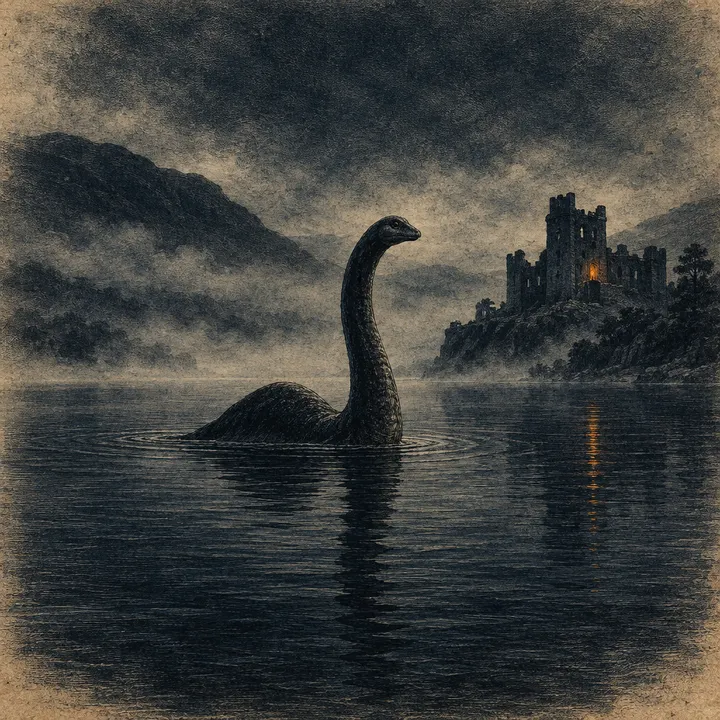
Nessie, the Loch Ness Monster, is said to be a large long-necked creature living in Loch Ness in the Scottish Highlands. It is probably the most famous cryptid in the world, and still unproven.
What it looks like
Usually described as a large animal with a long neck, small head and one or more humps on its back, often compared to a plesiosaur.
Where it appears
Loch Ness, a long, deep freshwater lake near Inverness, about 230 m deep at its deepest, with dark, peaty water.
What it does
Modern sightings boomed in 1933 after a new road was built along the shore, giving many people a clear view of the loch.
Thousands of sightings have been reported since, along with sonar searches, submarine dives and live webcams.
Weakness & protection
No weakness. Its 'enemy' is evidence: no body, bones or clear close-up photo has ever been found.
Where it came from
A 7th-century Life of St Columba tells of the saint driving away a 'water beast' in the River Ness, which is often cited as the first record.
The famous 1934 'Surgeon's Photograph' was revealed in 1994 to be a hoax using a toy submarine. A 2018 environmental DNA study of the loch found no reptile DNA but a lot of eel DNA, leading some to suggest giant eels as an explanation.
Fact check
- Is Nessie real?
- There is no scientific evidence of a large unknown animal in the loch. Waves, boats, logs, birds and eels explain many sightings.
- Could a plesiosaur live there?
- Very unlikely. Loch Ness was covered by ice until about 10,000 years ago, and plesiosaurs died out about 66 million years ago.