No.130 · 🇮🇶 Iraq · Ghosts
Etemmu
eṭemmu
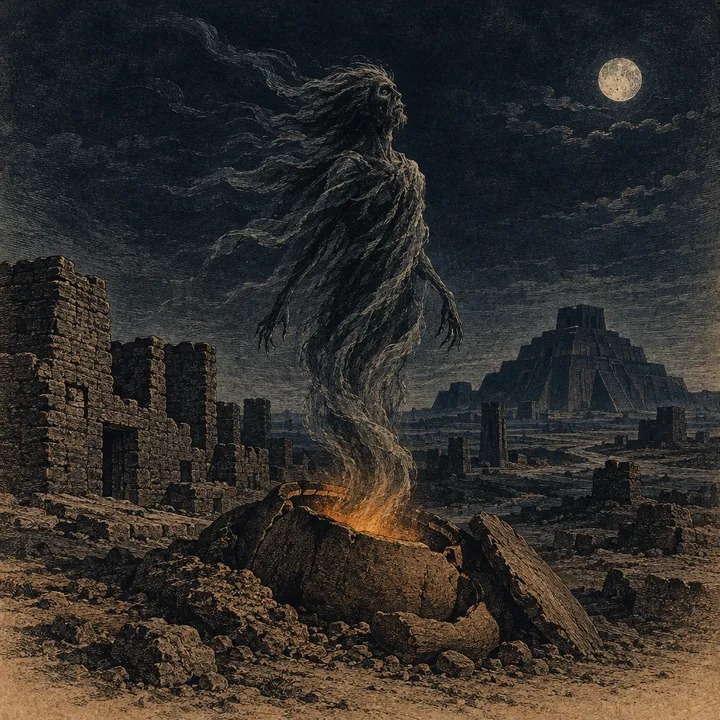
Etemmu was the ghost of the dead in ancient Mesopotamia, the land of Babylon and Assyria. Every person became one after death, and if their family forgot to feed and remember them, they came back to cause trouble.
What it looks like
Usually invisible. Texts describe it as a shadowy, wind-like presence, sometimes felt as a whisper in the ear or a weight in the body.
Where it appears
The dark underworld below the earth, family graves under the house, and the homes of relatives who neglected them.
What it does
The dead needed regular offerings of food, water and the speaking of their name, called kispu, from their family.
A neglected etemmu could cause headaches, ringing in the ears and other illnesses, according to medical texts of the time.
Weakness & protection
Exorcist priests (ashipu) performed rituals, made small figurines and recited incantations to send angry ghosts back.
The best protection was simply honoring the dead with offerings and remembering them.
Where it came from
Ghost beliefs are recorded on clay tablets thousands of years old, including incantations against ghosts and lists of symptoms they caused.
In the Epic of Gilgamesh, the ghost of Enkidu rises from the underworld to tell Gilgamesh about life after death.
Fact check
- Is this the oldest ghost on record?
- Mesopotamian ghost texts are among the oldest written ghost beliefs in the world.
- Where were the dead buried?
- Often beneath the floors of the family house, keeping the dead close to the people who had to feed them.