No.047 · 🇮🇱 Israel · Ghosts
Dybbuk
דיבוק
A dybbuk is a restless soul of a dead person that, in Jewish folklore, cannot find peace and attaches itself to a living body. The person then speaks and acts like someone else until the soul is released.
What it looks like
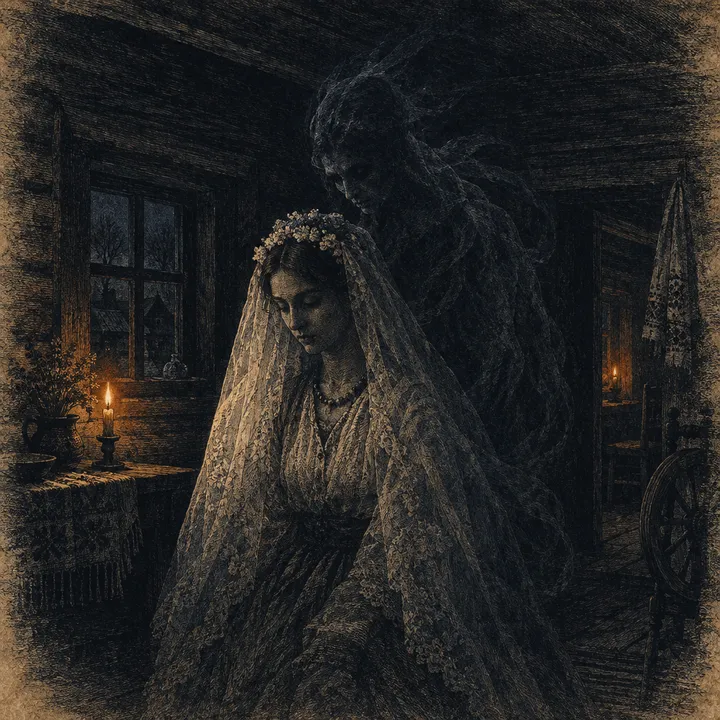
It has no body of its own. It shows itself through the person it clings to, who may speak in a different voice, often the voice of the dead.
Where it appears
The bodies of the living, especially in Eastern European Jewish towns (shtetls) in the old stories.
What it does
The word comes from the Hebrew for 'to cling'. A dybbuk is usually a soul with unfinished business or a sin it could not make right in life.
In tales it may cling to someone it loved, wronged or was wronged by.
Weakness & protection
A rabbi, with a group of ten men (a minyan), performs a ritual to persuade the soul to leave and find rest, often through prayer, the blowing of the shofar and calling out its name.
Where it came from
Stories of dybbuks were especially common in 16th to 19th-century Jewish communities in Eastern Europe.
S. Ansky's play 'The Dybbuk' (first staged in 1920), about a bride possessed by the soul of her dead lover, made it famous worldwide. The modern 'dybbuk box' is an internet legend from the 2000s.
Fact check
- Is a dybbuk a demon?
- No. In folklore it is the soul of a dead human, which is why it is grouped with ghosts.
- Is the 'dybbuk box' real?
- It began as an online auction story in 2003. Most people see it as a modern internet legend.