No.010 · 🇵🇭 Philippines · Shapeshifters
Aswang
Aswang
The most feared creature in Philippine folklore. By day an aswang looks like an ordinary villager. By night it becomes a beast, a bird or a flying horror that preys on the sick, the dead and unborn babies.
What it looks like
By day, a normal person, often a quiet neighbor. Telltale signs include bloodshot eyes that reflect you upside down. At night it can turn into a black dog, a pig, a cat or a large bird.
Where it appears
Rural villages across the Philippines, especially in the Visayas. The province of Capiz is famous, unfairly, as the home of aswang stories.
What it does
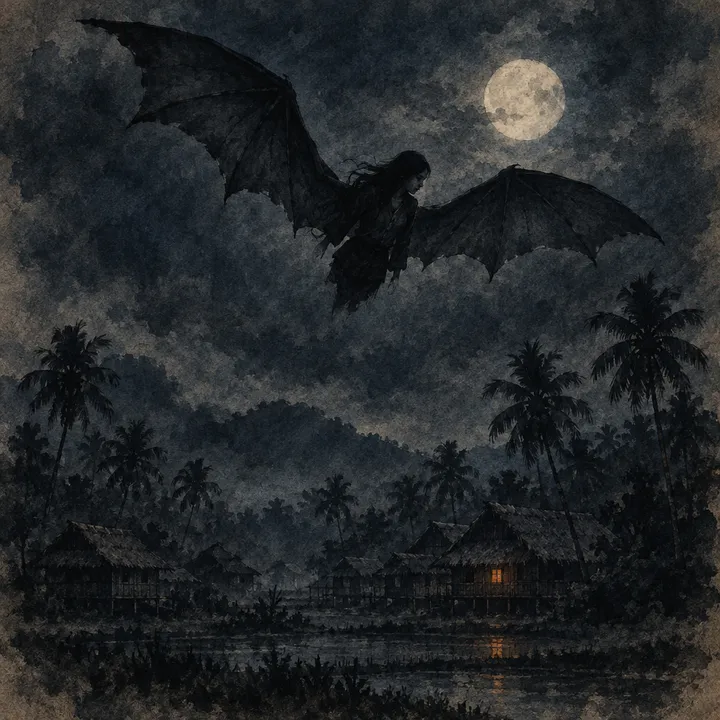
“Aswang” is an umbrella word for many night creatures. The best known is the manananggal, which splits its body at the waist and flies off with bat-like wings, leaving its legs standing behind.
Many tales say aswang prey on pregnant women, using a long, thin tongue to reach the unborn child, and steal corpses during wakes, replacing them with a banana trunk carved to look like the body.
A related creature, the tiktik, is named after its call. Folk wisdom says the quieter the sound, the closer it is.
Weakness & protection
Garlic, salt, holy water, and a whip made from a stingray's tail (buntot pagi) are the classic protections.
To kill a manananggal, find its abandoned lower half and cover the open wound with salt, crushed garlic or ash. It cannot rejoin its body and dies at sunrise.
Where it came from
Spanish missionaries recorded aswang beliefs in the 16th century. The friar Juan de Plasencia's 1589 account of Tagalog customs lists the “osuang” among dangerous figures.
Some historians say Spanish friars used aswang fears to label local healers and priestesses (babaylan) as evil. Aswang rumors can still damage reputations in rural areas today.
Fact check
- Are aswang the same as vampires?
- They are often called Filipino vampires, but aswang are mainly shapeshifters and ghouls. Many types eat flesh or organs rather than drink blood.
- Is Capiz really full of aswang?
- No. The link is a stereotype that the people of Capiz have long found unfair.