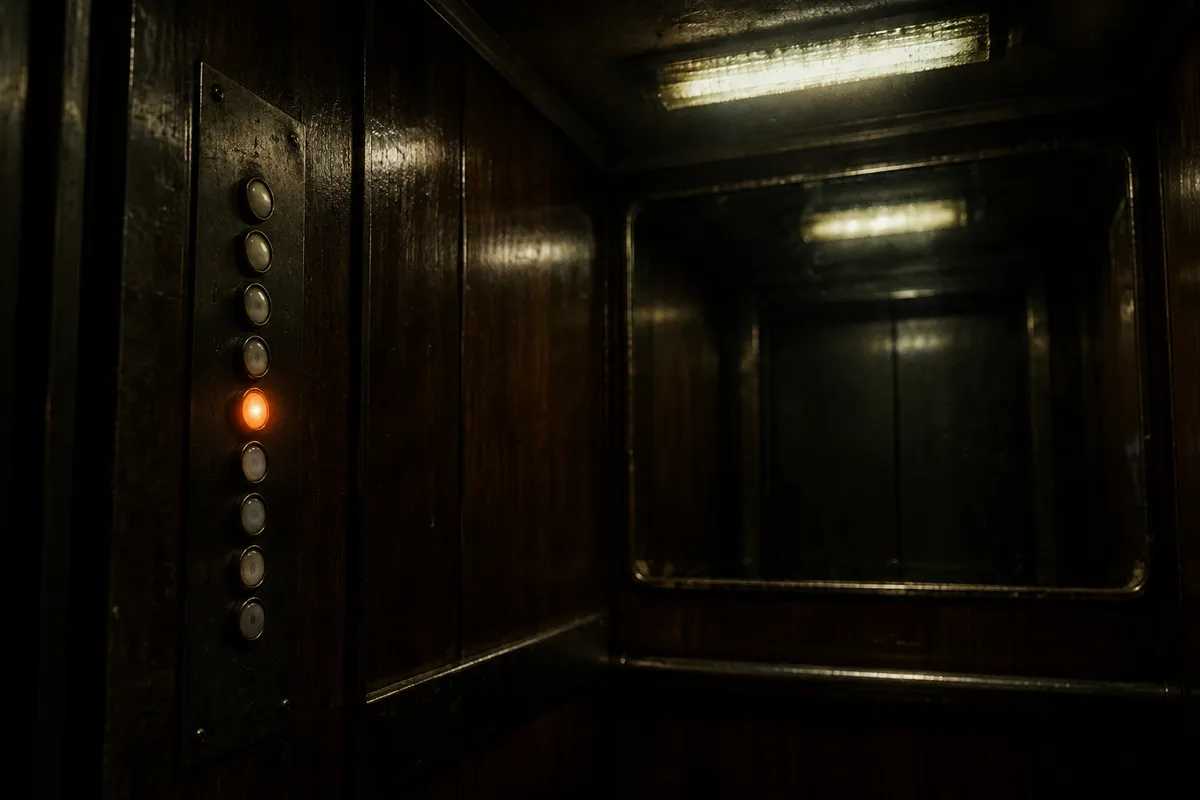
Why Korean Elevators Skip Floor 4: The Fear of Number Four
Take an elevator in a Korean apartment or hospital and you may see 1, 2, 3, F, 5. Sometimes 4 simply isn't there. The reason is a fear of the number four, called tetraphobia, shared across East Asia. Here's where it comes from, what the "F" means, and whether the famous study claiming more people die on the 4th of the month holds up. ▶ It's all about sound The reason is simple. In Korean, the number 4 is read "sa," which sounds exactly like the Sino-Korean word for death, also "sa." Chinese (sì and sǐ) and Japanese (shi) have the same or very similar overlap. That's why Korea, China and Japan all share some version of the taboo. There's nothing unlucky about four itself. It's a superstition born from a sound, which is why four means nothing scary in English. The West has its own version: the fear of 13. A building with no 13th floor is the Western cousin of an elevator with an F. ▶ What does the F stand for? The most common explanation is that F is for "Four." It lets you mark the fourth floor without writing the number. No official record shows who started using F or when. Some buildings simply jump from 3 to 5. It's especially common in hospitals. Places full of sick people and worried families tried harder to avoid a number that suggests death. Some hospitals are said to leave room 4 or bed 4 unused. ▶ The "heart attacks on the 4th" study One study claims the fear can affect the body. In 2001, the BMJ published research by David Phillips's team at the University of California, San Diego. Looking at US death records from 1973 to 1998, they found that Chinese and Japanese Americans died of heart disease on the 4th of the month about 7% more often than the average for other days. White Americans showed no such pattern. They called it the "Baskerville effect," after the Sherlock Holmes story The Hound of the Baskervilles, in which a character dies of a heart attack from sheer terror. The idea: stress on a day you believe is unlucky could strain the heart. Criticism came quickly. In 2002, statistician Gary Smith argued in the same journal that the team had picked only the heart disease categories that happened to peak on the 4th. Rechecking with data from other years, he found no clear rise on the 4th. Today most people consider the evidence that "four kills" to be weak. ▶ Still, it feels different Even without strong evidence, numbers carry feelings. That small odd feeling when you see F in an elevator shows how deep the superstition runs. Horror stories use it too: plenty of Korean school and hospital legends begin with "In room 4 on the fourth floor..." ▶ Why number superstitions don't go away Psychologists point to confirmation bias. If you believe four is unlucky, you remember the bad things that happened on the 4th or in seat 4, and you forget the good things and the bad things that had nothing to do with four. Over time the belief feels confirmed. It's also cheap to follow. Writing F on a button costs almost nothing and avoids making anyone uncomfortable. Even people who don't believe go along "just in case." There are lucky numbers too. In Chinese, 8 sounds like the word for getting rich, so it's loved. In the West, 7 is often considered lucky. Most good and bad feelings about numbers come from sounds and stories. ▶ Quick questions Do all Korean buildings remove floor 4? No. Many use 4 normally; some write F or skip it. Is a 4 in my phone number or license plate bad luck? There's no evidence it changes anything. Sometimes it even makes good numbers easier to get, since others avoid them. Is four lucky anywhere? In the West it's linked with the four-leaf clover. Meanings change with language and culture. ▶ What about your building? Does your apartment, school or hospital elevator have a 4, an F, or neither? Share your number superstitions in the comments. Korean urban legends, 15 stories: https://unnlog.com/talk/182 Sources: Phillips et al., "The Hound of the Baskervilles effect," BMJ (2001); Gary Smith's response, BMJ (2002); McGill Office for Science and Society, "Number four kills again, or does it?"