Japanese Urban Legends: 25 Stories and Where They Began
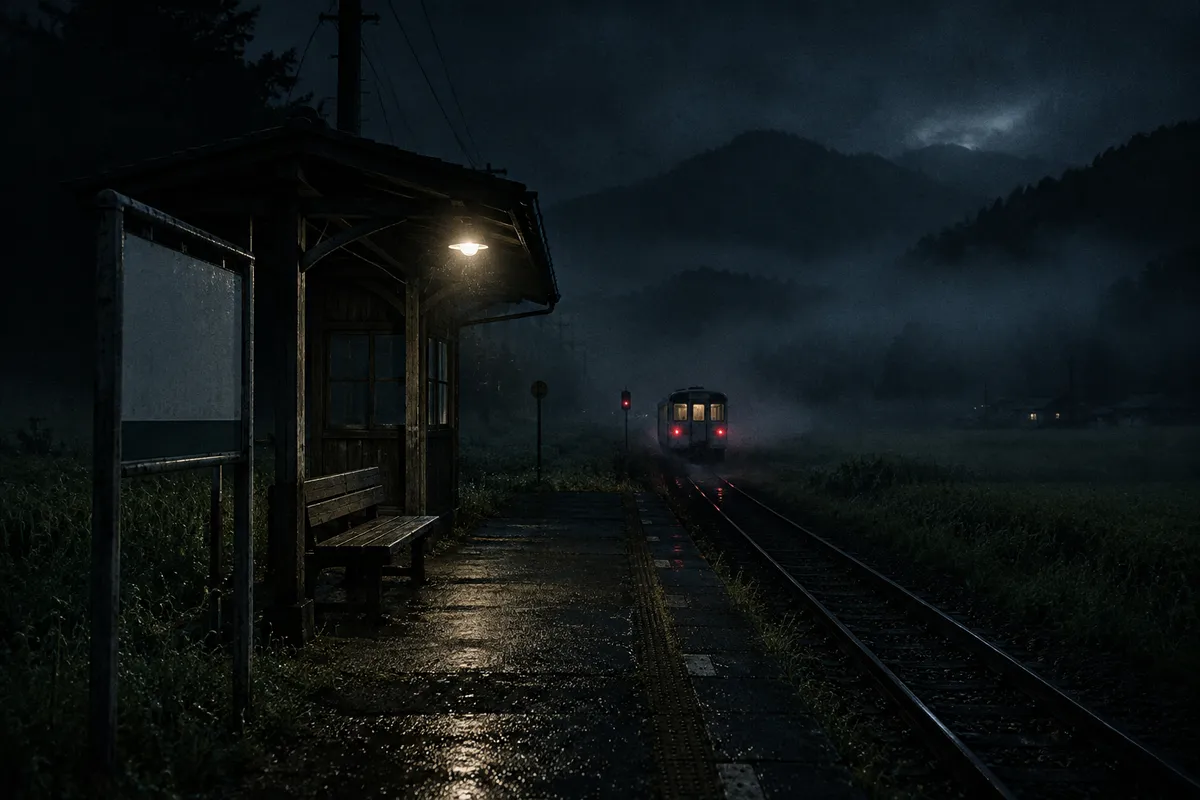
Japan has some of the most famous urban legends in the world, from a station that does not exist to a woman who asks "Am I pretty?" Most lists just name them. This one adds the detail people actually search for: where each story began, and when. Origin key: "2ch" means the giant Japanese message board 2channel, where many modern legends were born. Items with a link have a full page on Unnlog. ▶ Born on the internet 1. Kisaragi Station A woman posted live from a late-night train that stopped at a station on no map. Then her posts stopped. Origin: 2ch, 2004. https://unnlog.com/legend/kisaragi-station 2. Kunekune A white figure wriggling in a distant rice field. Look at it closely and you lose your mind. Origin: 2ch, around 2003. 3. Hasshaku-sama A very tall woman in a white dress and hat who makes a "po po po" sound and fixes on young boys. Origin: 2ch, 2008. 4. Kotoribako A wooden puzzle box built as a curse that kills women and children of a family. Origin: 2ch, 2005, set in a village in western Japan. 5. Hitori Kakurenbo "Hide-and-seek alone": a ritual played at 3 a.m. with a stuffed doll filled with rice. Origin: 2ch, 2006. 6. The Red Room A pop-up ad asks, "Do you like the red room?" and closing it is said to bring death. Origin: an internet Flash animation, around 2000. 7. Inunaki Village A hidden village near a tunnel in Fukuoka, with a sign saying Japanese law does not apply there. Origin: rumors from the 1990s around a real abandoned area. Film: 2020. ▶ School legends 8. Hanako-san of the Toilet Knock three times on the third stall and call her name, and a girl's voice answers. Origin: school rumors spreading from the 1950s to 1980s; film boom in the 1990s. https://unnlog.com/legend/hanako-san 9. Aka Manto A voice in the school toilet asks whether you want a red cape or a blue cape. Origin: rumors in Tokyo in the 1930s, one of the oldest school legends. 10. Teke Teke The upper half of a girl cut by a train, dragging herself on her elbows with a "teke teke" sound. Origin: school rumors, widely known by the 1990s. 11. Kashima Reiko A legless ghost who asks a question in the bathroom; you survive only with the right answer. Origin: school and chain-letter rumors, 1970s–80s. 12. Kokkuri-san A coin, a sheet of letters, and a spirit called by students. It became Korea's bunshinsaba. Origin: a Western table-turning craze that reached Japan in the 1880s. https://unnlog.com/legend/kokkuri-san ▶ Rumors that caused panic 13. Kuchisake-onna A masked woman asks, "Am I pretty?" Under the mask, her mouth is slit to her ears. Origin: Gifu Prefecture, 1979. Schools sent kids home in groups. https://unnlog.com/legend/kuchisake-onna 14. Jinmenken A dog with a man's face that says "leave me alone" when you look at it. Origin: a national boom in 1989–90. 15. Merry-san's Phone Call A thrown-away doll calls you again and again, each time closer, until: "I'm behind you." Origin: told as a scary story from at least the 1980s. 16. Tsuchinoko A fat, short snake that can jump. Towns have offered rewards for one. Origin: older folk sightings; a national boom in the 1970s. ▶ Cursed things and places 17. Okiku's Well A maid is thrown into a well and every night counts plates: "one... two..." and never reaches ten. Origin: Edo-period ghost tales (kaidan), with several versions. https://unnlog.com/talk/116 18. The Okiku Doll A doll in a temple in Hokkaido whose hair is said to keep growing. Origin: the story of a doll kept since the early 20th century. 19. Tomino's Hell A poem said to bring disaster if read aloud. Origin: the poem is real, by Yaso Saijō in 1919. The curse story came much later. 20. Gozu, the Cow Head A story so frightening that everyone who hears it dies, which is why nobody can tell it. Origin: best known from Sakyo Komatsu's 1965 short story. The joke is that the story does not exist. 21. Sugisawa Village A village in Aomori where a man killed all the villagers, now erased from maps. Origin: rumors spread by TV and the internet around 2000. No such case has been confirmed. ▶ Older folklore that is still alive 22. Nopperabō A person who turns around and has no face at all. Korea has a similar "egg ghost". Origin: Edo folklore; famous in English through Lafcadio Hearn's "Mujina" (1904). 23. Yuki-onna A pale woman in a snowstorm whose breath freezes men to death. Origin: old folklore from snowy regions; retold in Hearn's Kwaidan (1904). 24. Kappa A river creature with a water-filled dish on its head that drags people and horses into rivers. It loves cucumbers. Origin: Edo-period records and much older river folklore. 25. Gashadokuro A giant skeleton made of the bones of people who starved. Origin: surprisingly modern. It appears in yokai books from the 20th century, inspired by an Edo-era print of a giant skeleton. ▶ Quick answers Which Japanese urban legend is the most famous? Kuchisake-onna and Hanako-san are known by almost every Japanese child. Kisaragi Station is the most famous internet legend. Why did so many legends come from 2ch? Anonymous posting let people tell stories "live" as if they were happening, which made them feel real. Are any of these true? None of the supernatural parts are proven. Some, like Okiku's Well and Inunaki Village, are tied to real places or old records. ▶ Keep reading Korean ghosts and monsters, 18 types: https://unnlog.com/talk/181 Korean urban legends, 15 stories: https://unnlog.com/talk/182 All legends on Unnlog: https://unnlog.com/legend Which one scares you the most? Tell us in the comments.